How to Find the Right IIT Coaching Center in Hyderabad?
For students who want to succeed in the IIT-JEE exam, choosing the right coaching institute may be the biggest decision they will have to make during their education. There are...
Empowering learners and educators with a comprehensive platform that bridges the gap between traditional and modern education. iStudy inspires excellence in education and fosters growth for a brighter future.


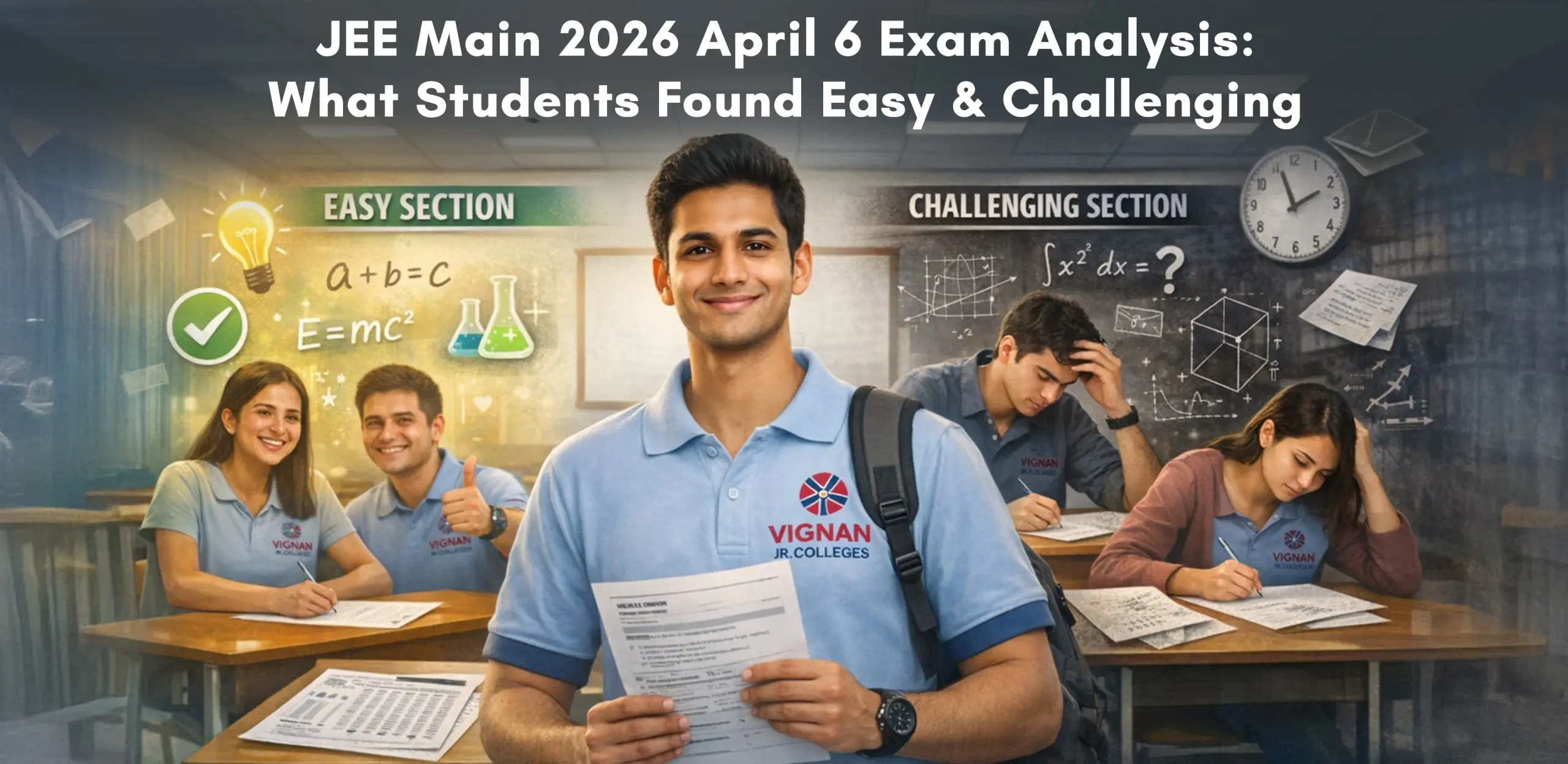
On April 6, the second session of the JEE Main for 2026 took place, which is very important for all students hoping to take this exam around the nation. The exam consisted of two shifts (morning, 9:00 am -12:00 pm and afternoon 3:00 pm - 6:00 pm) that were similar to previous days and each shift's content was balanced; however, the competition was fierce. Many of the students who took the test gave us an assessment that indicated both shifts would be moderately difficult when compared to each other and had considerably varying levels of difficulty from one subject to another.
Students taking both morning and afternoon shifts indicated that the paper was balanced (not too easy or very difficult) and adequately assessed their ability to demonstrate both conceptual understanding and their ability to manage their time. Most students who took the exam reported that although they could complete the exam, they needed to work hard to accomplish this goal and that they used different strategies to help them achieve success, strategies that most students that attend an IIT coaching in Hyderabad are taught to use.
Mathematics – Lengthy and Time-Consuming
Mathematics remains the most difficult section. The section was reported to take a long time and was reported to require a lot of thought and multiple steps to get the correct answer. The majority of the questions were concept based and included subjects including Calculus, Algebra and Coordinate Geometry.
A number of candidates reported that even the best prepared candidates did not complete all of the questions in the time allowed. This indicates that regular practice and problem solving strategies, which are a key focus of IIT coaching in Hyderabad programs, enhance speed and accuracy.
Physics – Moderate with Mixed Concepts
Moderate is how Physics was rated for its degree of difficulty in terms of difficulty level. The questions included in the Physics section were a mixture of conceptual based questions and formula based questions. The three primary content areas included in the Physics section were mechanics, electromagnetic, and modern physics.
Students who have a strong understanding of basic physics concepts were able to score well on this section. Physics was generally easier than mathematics, and as a result, most candidates completed the Physics section without difficulty because the amount of time needed to complete it was significantly less. Most candidates also credited their IIT coaching in Hyderabad as providing an enormous benefit in helping them prepare for this section.
Chemistry – Easiest and Scoring
The chemistry section was the least difficult compared to other sections of the exam for both shifts. Most of the chemistry questions were found directly from NCERT textbooks, therefore students who prepared using NCERT textbooks were able to score well on this exam.
The chemistry section contained an equal mix of organic, inorganic and physical chemistry; the direct questions and predictable patterns allowed students to save time that could be spent on more difficult sections such as mathematics. This demonstrates how important it is to prepare using the NCERT books because this is one of the main methods that IIT coaching in Hyderabad use to prepare students for these exams.
Shift 1 (Morning Session)
The first shift was reported to be moderate overall. Mathematics was lengthy, Physics was manageable, and Chemistry was straightforward. Students who maintained proper time allocation were able to attempt a good number of questions.
Shift 2 (Afternoon Session)
The second shift followed a similar pattern. There were no major surprises in terms of question distribution or difficulty level. However, some students felt that Mathematics was slightly more time-consuming compared to Shift 1. Overall, the paper remained balanced and fair.
Most students described the exam as “fair but tricky.” While the questions were not extremely difficult, the challenge lay in managing time effectively. Many candidates emphasized that regular mock tests and practice sessions played a crucial role in their performance.
Students who relied on structured preparation methods, such as those offered by IIT coaching in Hyderabad, appeared more confident in handling the pressure and complexity of the exam.
On the JEE Main 2026 April 6 examination, students noticed that developing a complete method of preparation was an important element. Students who took into consideration structure while preparing for this exam (with moderate to high levels of difficulty) achieved a clear advantage by continuing to do regular practices, have an overall understanding of all concepts and practice good time management.
In conclusion, any aspirants who wish to succeed at future sessions should utilize appropriate guides as many institutions, such as Vignan Junior Colleges, can help students regarding how to learn structure and use various styles of mentoring and have result oriented preparation procedures.
1. What was the overall difficulty level of JEE Main 2026 April 6 exam?
The overall difficulty level was moderate, with a balanced mix of easy and challenging questions.
2. Which section was toughest in the April 6 JEE Main exam?
Mathematics was the toughest and most time-consuming section in both shifts.
3. Was Chemistry easy in JEE Main 2026 April 6?
Yes, Chemistry was the easiest section, with many questions directly based on NCERT.
4. How was Physics in the April 6 JEE Main exam?
Physics was moderate, featuring a mix of conceptual and formula-based questions.
5. Did both shifts of April 6 JEE Main 2026 have similar difficulty levels?
Yes, both shifts followed a similar pattern with moderate difficulty and comparable question distribution.
For students who want to succeed in the IIT-JEE exam, choosing the right coaching institute may be the biggest decision they will have to make during their education. There are...
Selecting an appropriate college to attend after the completion of their secondary education is vital for an individual who wishes to prepare for a highly competitive examination such as JEE...

Stepping into intermediate education is a crucial phase in every student’s academic journey. It is a time when the foundation for future careers is built, and making the right choices...

To crack JEE requires the right support, regular practice and a solid academic background. This is why almost all aspirants are searching for best IIT coaching centers in Hyderabad which...
When it comes to choosing an institution to receive coaching as a JEE aspirant, the selection of the appropriate coaching institution is very important. Since there are so many students...
Comments